
How to Register as a Voter in India
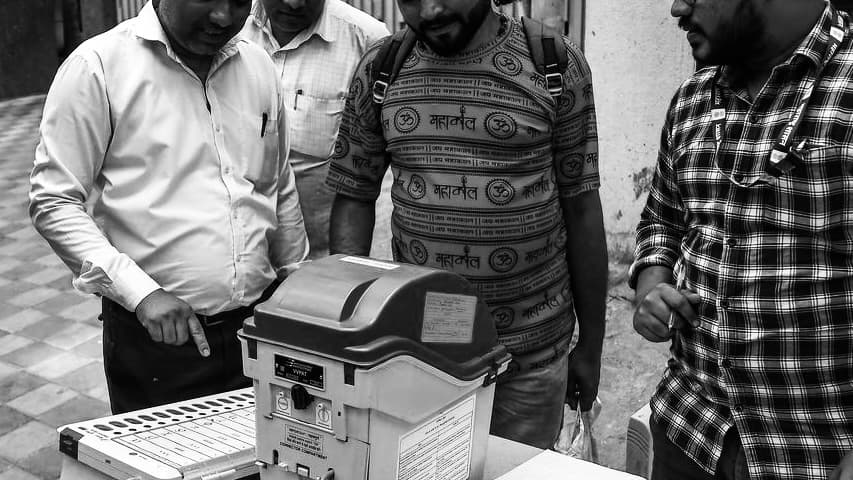
A step-by-step guide to voter registration in India, including required documents, online registration process, and important deadlines.
How to Register as a Voter in India
India's democracy, the largest in the world, rests upon one of its most fundamental rights — the right to vote. Yet, millions of blue-collar workers across the country remain disenfranchised due to the lack of awareness, documentation, or access to the voter registration process.
The Current Challenge
As India's internal migrant population surpasses 450 million, ensuring that every worker — from construction labourers to delivery personnel — can exercise their democratic right has become an urgent national priority.
Research Findings
To bridge this awareness gap, Janseva, a civic-tech initiative focused on improving access to government schemes and benefits for blue-collar workers, conducted a nationwide survey earlier this year. The survey, spanning six states and over 3,000 respondents, revealed:
- 58% of eligible workers were unaware of how to register as voters
- Almost one in three did not possess the necessary documents
Step-by-Step Registration Guide
Fortunately, India's Election Commission (ECI) has streamlined the voter registration process, making it simpler, more accessible, and largely digital.
Step 1: Check Eligibility
Any Indian citizen aged 18 or above on January 1 of the year in which the electoral roll is revised is eligible to register as a voter.
Important: Migrant workers should register in the constituency where they ordinarily reside, even if they move frequently for work.
Step 2: Collect Required Documents
To register, one needs three key documents:
- Proof of Age: Birth certificate, Class 10 marksheet, or Aadhaar card
- Proof of Residence: Electricity bill, rent agreement, ration card, or employer-issued letter
- Photograph: A recent passport-sized photo
Step 3: Register Online or Offline
The easiest way to register is through:
- National Voters' Service Portal (www.nvsp.in)
- Voter Helpline App (available in multiple languages)
Applicants must fill Form 6 and upload the required documents.
For those without digital access, the same form can be submitted at:
- Booth Level Officer's (BLO) office
- Local Election Registration Office (ERO)
Step 4: Verification and Inclusion
- Once submitted, the BLO visits the applicant's residence for verification
- Upon approval, the voter's name is added to the electoral roll
- A Voter ID (EPIC) is issued
- The process usually takes between 2–4 weeks
How Janseva Helps
Recognizing the barriers faced by informal sector workers, Janseva has developed a localized information module within its platform to guide blue-collar workers through voter registration in their preferred language.
The module provides:
- State-specific document checklists
- Connections with local facilitation centres
- Multi-language support
This effort aligns with Janseva's broader mission to strengthen democratic participation through technological inclusion.
Conclusion
In a democracy that thrives on representation, enabling every worker to cast their vote is not merely an administrative exercise — it is an act of empowerment. By simplifying the path to voter registration, initiatives like Janseva are ensuring that the voices of India's most industrious citizens are not just heard, but counted.
Get Involved
Want to learn more about civic engagement and government schemes?